People ask what I’m reading more often than you might think, and I never have a good answer ready, so here are three I keep going back to.
The Pragmatic Programmer
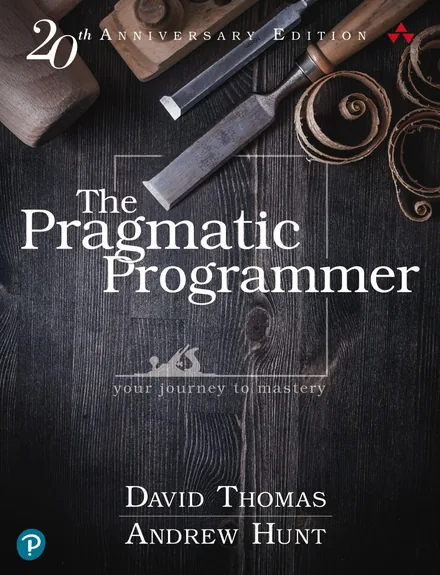
This one is about the job rather than any particular language. It’s a pile of short essays on the stuff nobody teaches you directly: how to keep knowledge in one place instead of five, how to write code you can still change in a year, when to prototype something cheap and throw it away, how to talk to the people you work with. The examples have aged, since the book came out in 1999 and there’s a fair amount of Perl and CORBA in there, but the advice underneath has not. I reread chunks of it every couple of years and get something different each time.
Takeaways:
- Don’t live with broken windows. The first ignored warning or hacky workaround is permission for the next one, and then you’re working in a codebase nobody respects/properly maintains.
- Explain the bug out loud to someone, or to a rubber duck if nobody’s around. Saying it in order is usually enough to find it.
House of Leaves

A horror novel about a house that’s bigger on the inside than the outside, except you never get that story directly. You get a dead man’s academic manuscript about a documentary that might not exist, annotated by a guy who is falling apart as he transcribes it, with his footnotes eating the page from below. The typography is doing real work here. Text spirals, runs backwards, gets stranded in a corner of an otherwise blank page, and the layout tightens up when the hallway does. It’s the only book I’ve read where the physical object is part of the horror. It is also long and occasionally insufferable, and I love it.
Takeaways:
- How you lay something out is part of what it says. That goes for a novel and it goes for an interface.
- Nobody telling you the story is neutral. Worth remembering when you’re reading documentation written by whoever built the thing.
The Design of Everyday Things
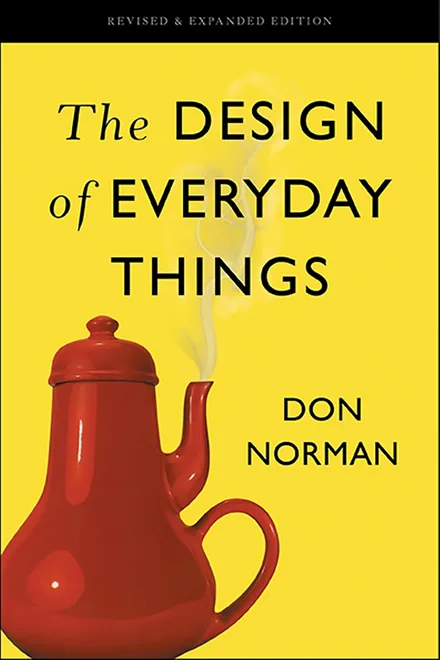
Norman’s whole argument is that when someone pushes a door that needs pulling, that’s not a dumb user, it’s a bad door. He builds out a vocabulary for why: affordances for what an object lets you do, signifiers for how it tells you, mapping for whether the controls match the thing they control, feedback for whether you can tell your action landed. Once you have the words, you can’t stop noticing. I have opinions about microwave panels now. This is the book that turned “users keep getting this wrong” from a complaint into a bug report.
Takeaways:
- If people keep making the same mistake, the design is doing it to them. Fix the design.
- Make sure something visibly happens when a person acts. Silence reads as broken, and they’ll click it again.
That’s part one. I might do some others when I find the time.