I enjoyed writing the last one enough to the list going. Here are three more, and gasp none of them are about software!
The Three Pillars of Zen
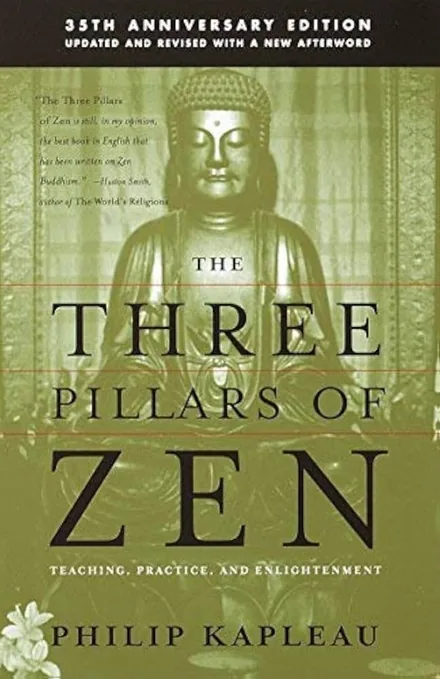
Kapleau was an American court reporter who covered war crime trials, went to Japan, then stayed thirteen years to train under a monk. The book he came back with is not a book about Zen, so much as a set of primary documents. You get a teacher’s lecture series on the actual mechanics of sitting, transcripts of interviews between the teacher and his students, and then a looong section of first-person accounts from people describing what happened to them. A student arrives with a tidy intellectual account of what they have understood, and the teacher simply declines to accept it, over and over, until the student stops performing. It is the least mystical book about enlightenment I have ever read, which is a big reason why I find it so fascinating.
Takeaways:
- The posture instructions are not a warmup for the real thing, they are ‘the thing’.
- A clean explanation of an experience is not the experience. Life is a messy business, and as Nietzsche once said about nature, there are “no exactly straight line(s), no actual circle(s)“.
Writing with Style
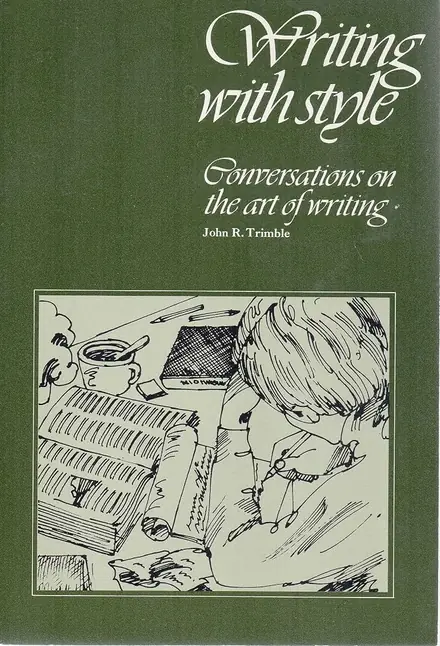
Short, punchy, and the only style guide I have ever taken to heart. Trimble’s premise is that most bad writing isn’t a grammar problem, but a courtesy problem. The writer is busy expressing himself and has forgotten that a stranger has to follow his prose sentence by sentence with no idea where it is going. So the book becomes mostly about the reader: how to open without clearing your throat for a paragraph, how to carry someone painlessly through a transition, and precisely where to put the thing you want them to remember. He also spent a chapter killing the rules I was taught and never questioned, like the one about prepositions at the end of a sentence. The advice even holds up for commit messages and design docs!
Takeaways:
- Write the draft to find out what you think, then rewrite it for the person who has to read it. Those are two different jobs and trying to do them simultaneously really produces neither.
- If a sentence is hard to follow, that is your problem to fix, not the reader’s to push through.
23 Things They Don’t Tell You About Capitalism
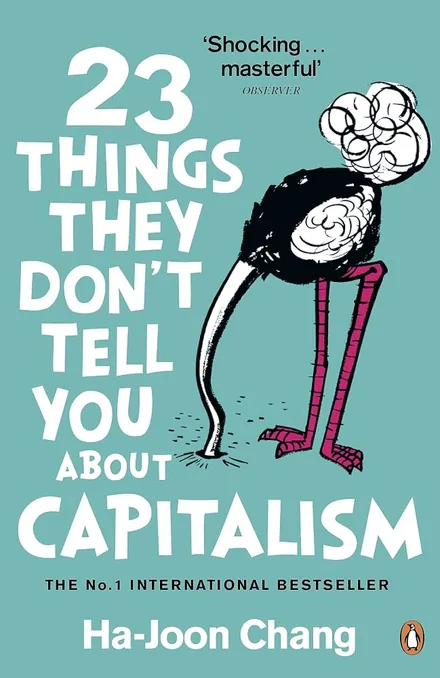
Twenty-three short, insightful chapters, each one opening with what you have been told and then elucidating why it is false. Chang is a Cambridge economist and not remotely anti-capitalist, which makes his points all the more salient. He is arguing that the version of capitalism most people treat as the ‘natural state of things’ is one design among several, assembled out of choices that were fought over, then forgotten. The opening chapter claims there is no such thing as a free market, and the argument is simply that every market in reality runs on rules you never even considered were optional, like who is allowed to work and what may be sold at all. My favorite chapter argues the washing machine changed the world more than the internet did, and he is annoyingly convincing about it. You do not have to accept all twenty-three, but reading this certainly made me think about economic claims more carefully.
Takeaways:
- When something looks like the absence of rules, it usually means the rules are old enough that everyone stopped seeing them.
- The technologies that feel revolutionary and the technologies that actually rearranged how people live are rarely the same ones.